Decision Modeling Notation (DMN) Implementation: Standardising Complex Business Rules for Clarity and Execution
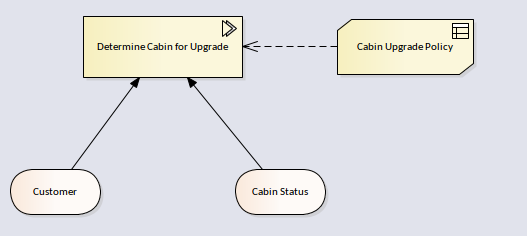
Organisations rely on business rules every day, even if they do not label them that way. Eligibility checks, pricing logic, approval thresholds, fraud triggers, and exception handling are all governed by rules and policies. The challenge is that these rules often live in scattered documents, emails, spreadsheets, or embedded code. Over time, they become difficult to validate, update, and explain. Decision Modeling Notation, or DMN, offers a structured way to model decisions using standard graphical notation and executable logic. It helps teams represent complex business policies clearly, reduce ambiguity, and connect rule design directly to implementation.
DMN is especially useful when a process involves repeated decisions that must be consistent across channels, teams, and systems. Instead of relying on ad-hoc interpretations, DMN provides a shared language that business and technical teams can use together.
Why DMN Matters for Business Rules and Policy Execution
The main value of DMN is that it separates decision logic from process logic. Many organisations attempt to manage decisions inside process diagrams or application code. This makes it harder to reuse decisions across products and harder to audit the logic when policies change.
DMN addresses this by treating decisions as first-class artefacts. A decision can be modelled independently, tested independently, and deployed independently. This approach reduces duplication. It also improves governance because decision logic becomes visible and traceable.
DMN uses a small set of standard elements such as decision tables, input data, knowledge sources, and business knowledge models. These components allow teams to represent not only the decision outcome but also the supporting logic and the data it depends on. Learners often encounter this perspective when exploring a business analyst course in chennai, where modelling techniques are introduced as practical tools for aligning business intent with system behaviour.
Core DMN Building Blocks and How They Work Together
A DMN model typically starts with a Decision Requirements Diagram, often called a DRD. The DRD shows how decisions depend on input data and on other decisions. It acts like a map. It tells stakeholders what drives a decision, which rules apply, and where the final outcome comes from.
Input Data and Knowledge Sources
Input data represents the information required to make the decision. This may include customer attributes, transaction details, product types, or policy parameters. Knowledge sources represent where the rules originate, such as regulatory guidelines, internal policies, or domain experts.
Decision Tables and Business Knowledge Models
Decision tables are one of the most widely used DMN components. They allow teams to represent rules in a clear tabular format, with conditions and outcomes. For example, a decision table can define how interest rate varies based on credit score ranges and loan duration.
Business knowledge models store reusable logic. Instead of writing the same rule set repeatedly, a business knowledge model can be referenced by multiple decisions. This supports consistency and makes maintenance simpler.
A Practical Approach to Implementing DMN in Projects
Successful DMN implementation requires more than drawing diagrams. It needs a repeatable method that connects business understanding, rule validation, and technical execution.
Step 1: Identify High-Impact Decision Areas
Start with decisions that are frequent, high-risk, or constantly changing. These often include compliance-related rules, pricing strategies, eligibility checks, or approval workflows. DMN is most effective where clarity and change management matter.
Step 2: Capture Rules and Define Decision Boundaries
Work with stakeholders to capture rules in plain language first. Then define the boundaries of the decision. What triggers it? What inputs are required? What outputs must it produce? Clear boundaries prevent the model from expanding into an unmanageable structure.
Step 3: Build the DRD and Validate with Stakeholders
Create the Decision Requirements Diagram and review it with business users. The goal is alignment. Stakeholders should be able to confirm that the dependencies and outcomes reflect real policy intent.
Step 4: Convert Key Rules into Decision Tables
Translate rules into decision tables using agreed data definitions. Focus on completeness and consistency. Ensure every possible scenario is covered or intentionally excluded with a defined fallback rule.
Step 5: Execute and Integrate
DMN becomes even more valuable when it is executable. Many rule engines and modelling tools support DMN execution. This enables automated testing, simulation, and integration with applications through APIs or service layers. Teams can version decisions and deploy updates without modifying core process flows.
Governance, Testing, and Maintenance for Sustainable DMN Use
DMN improves governance by making decisions transparent, but it still requires discipline. Decision models should be version-controlled and reviewed like code. Changes should be traceable to policy updates or stakeholder approval. Testing is equally important. DMN decision tables can be validated with test cases that cover normal conditions, edge cases, and exceptions.
A strong practice is to maintain a decision inventory. This repository lists key decisions, owners, dependencies, and deployment contexts. It helps organisations avoid duplication and ensures rule reuse is intentional.
For professionals strengthening their modelling and governance capabilities, the practical emphasis of a business analyst course in chennai can support better decision documentation, stakeholder validation, and structured rule maintenance.
Conclusion
DMN provides a standard, structured way to model and execute business rules and policies. By separating decision logic from process flow, it improves clarity, reusability, and governance. Decision tables and DRDs help teams visualise how outcomes are produced, making rule logic easier to validate and update. When implemented with a practical method and supported by testing and version control, DMN becomes a reliable foundation for consistent decision-making across systems. For organisations facing complex, changing policies, DMN offers a clear path from business intent to executable logic without confusion or fragmentation.